
If you run more than about ten locations, the tool that got you here stops working. Not because it lacks features, but because everything becomes a repetition problem: one hours change is thirty edits, and no single report tells you how each site is actually performing.
This roundup is organised by how many locations you run, not by product category, because that is the thing that actually decides what fits. Same platforms most roundups cover, sorted by the question you are really asking.
Disclosure
BizLoc8 is ours. It appears here because it covers listings, reviews and rank tracking across locations and also reports whether AI engines recommend you, which the listings-first platforms do not. The comparison of everything else below is written straight.
What actually changes at multiple locations
Three things break, and they break in this order.
- Editing becomes repetition. A seasonal hours change is a five-minute job at one location and an afternoon at forty. This is the first pain, and the one people buy software to fix.
- Nobody is certain the data is right. With enough locations, some listing somewhere is wrong and you will not know until a customer turns up to a closed shop. Consistency stops being a checklist and becomes an ongoing job.
- Reporting stops answering the question. An average ranking across forty stores is close to meaningless. You need per-location visibility, grouped how the business is actually run, by region, by brand, by franchisee.
Most teams buy for the first problem and discover the third is the one that mattered.
Under 10 locations: you may not need a platform yet
Google Business Profile Manager handles bulk edits by spreadsheet upload, free, and it is more capable than most people assume. At this size it is a reasonable answer and worth exhausting before you buy anything.
What it will not tell you is how you are performing. There is no per-location rank tracking against competitors, no review workflow across sites, no history when a location slips, and nothing at all about how AI engines describe you. It is an editing tool, not a visibility tool. Pair it with a rank tracker and you have covered the basics.
The real tipping point
It is not a location count. It is the first time a routine change takes an afternoon, or the first time you cannot answer which locations are underperforming without opening ten tabs.
10 to 50 locations: the awkward middle
This is the least well served size, and it is where most multi-store retail, clinic groups and regional chains sit. You are past what free tooling handles comfortably, but enterprise platforms are priced and scoped for hundreds of sites, so you end up paying for syndication breadth you do not need.
What matters at this size:
- One login covering all three jobs. Listings, reviews and rank tracking stitched from three vendors is where the reporting falls apart.
- Location groups. The ability to change a subset without touching everything, and to report by region or brand.
- Per-location rank data. Averages hide the two stores actually losing money.
- Permissions. A store manager should be able to reply to their own reviews without editing anyone else's listing.
Practical options here are the mid-market tier of the enterprise platforms, Synup and SingleInterface, or a local SEO suite like BrightLocal or Semrush Local if listings volume is modest and reporting matters more than syndication.
Multi-location rank tracking is usually the capability that decides it, because it is the one most often missing from listings-first tools.
50+ locations and franchises: enterprise
Above roughly fifty locations the problem changes again. Accuracy across a large directory network becomes the whole point, and you need structured control over how data flows out.
- Yext is the enterprise standard for listings syndication and keeping business data in sync across a wide network. Priced like the standard too.
- Uberall pairs listings with reputation and is particularly strong across Europe.
- SOCi is built for franchises, with localised social, reviews and listings run centrally but executed per outlet.
- SingleInterface is strong across India and APAC for regional enterprise brands.
The franchise distinction matters more than the location count. Franchise networks need local autonomy with central guardrails, which is a different product shape from one brand running its own sites.
Agencies managing multiple client brands
Agencies get pushed toward multi-location platforms and it is often the wrong fit. Enterprise tools are built around one brand with many locations. An agency has many brands, each with their own locations, and that changes what you need:
- Separate client workspaces so data never mixes.
- White-label reporting you can send under your own brand.
- Permissions per client, so a client login sees only their own locations.
- Per-client billing that scales sanely as you add accounts.
BrightLocal is the common agency default largely because it was designed around this model. Semrush Local makes sense if the agency already lives in the Semrush suite. If you are weighing running this in-house against outsourcing it, the alternatives to hiring an agency covers that trade-off.
Bulk Google Business Profile editing, by how much work it saves
Nearly every platform claims bulk editing. What differs is how much of the job it actually removes.
- Spreadsheet upload. The baseline, and what Google Business Profile Manager gives you free. Fine for a one-off rollout, tedious for recurring changes.
- Location groups and saved segments. The first genuine time saver, because most changes apply to a subset rather than everything.
- Bulk posting and bulk replies. Where the recurring hours go once listings are stable.
- Preview and approval before publish. The one that prevents an expensive mistake across every location at once.
Our Google Business Profile bulk update guide walks through the mechanics of doing this at scale, including the parts Google's own tooling handles perfectly well.
The gap every option here still has
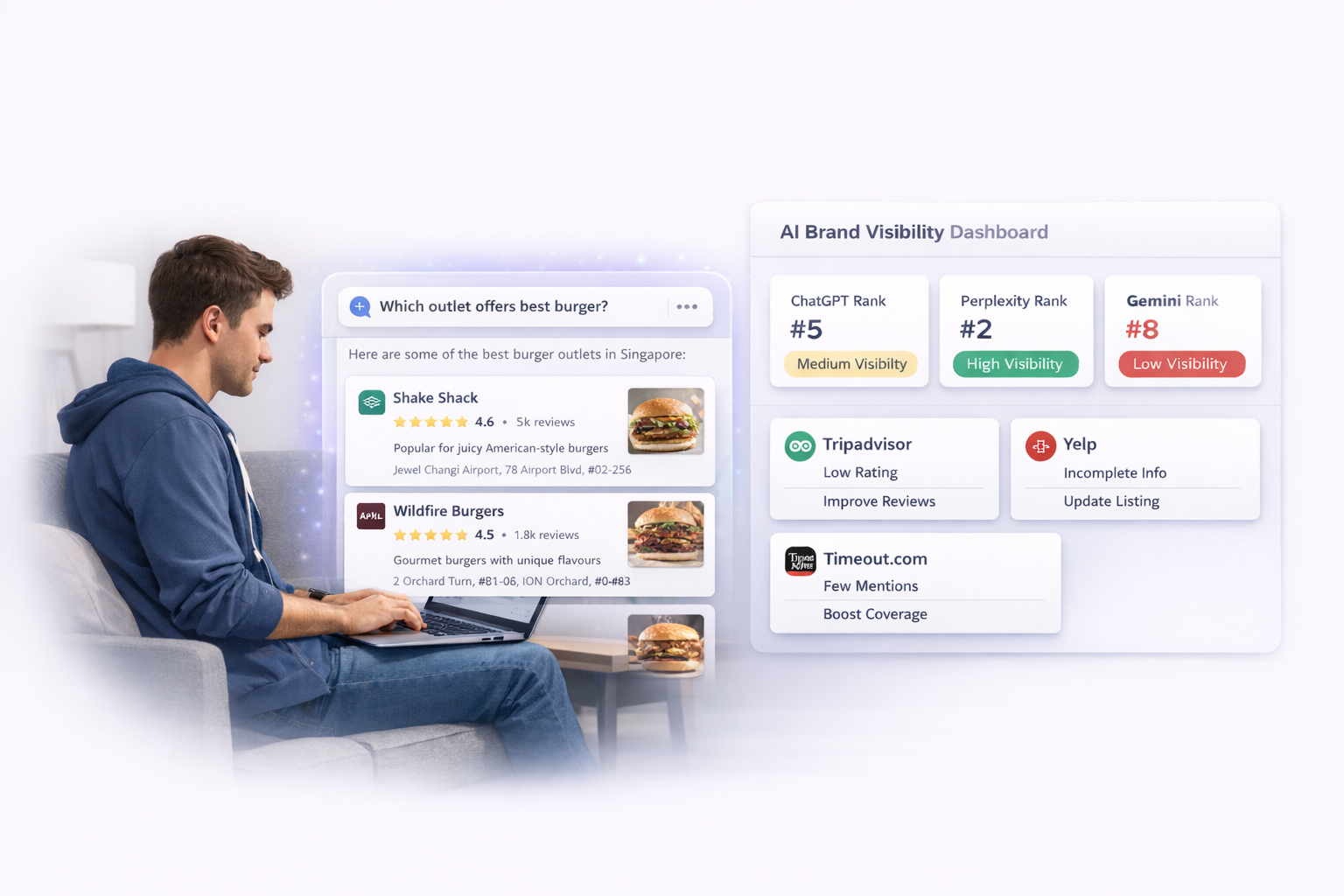
Every platform above reports where you rank on Google. None of them report whether ChatGPT, Gemini or Perplexity name your locations when somebody asks for a recommendation.
That matters more at multi-location scale, not less, because AI answers are usually city-specific. A brand can be recommended in one city and invisible in the next, and a national average will never show it. This is the job AI visibility tracking does, and it is why BizLoc8 exists alongside the local SEO toolkit rather than instead of it.
Comparison at a glance
Capability only. Pricing is deliberately left out because at multi-location scale it is quoted per location and changes by contract.
| Platform | Best at this size | Bulk GBP | Per-location rank | Reviews | Agency model | AI visibility |
|---|---|---|---|---|---|---|
| GBP Manager | Under 10 | ✓ | – | Partial | – | – |
| BrightLocal | Agencies, SMB | ✓ | ✓ | ✓ | ✓ | – |
| Semrush Local | Existing Semrush users | ✓ | ✓ | ✓ | Partial | – |
| Synup / SingleInterface | 10 to 200 | ✓ | Partial | ✓ | Partial | – |
| Yext | Enterprise listings | ✓ | – | ✓ | Partial | – |
| Uberall / SOCi | Enterprise, franchise | ✓ | Partial | ✓ | Partial | – |
| BizLoc8 | 10 to 500 | ✓ | ✓ | ✓ | ✓ | ✓ |
How to choose, quickly
- Under 10 locations → Google Business Profile Manager plus a rank tracker.
- 10 to 50 locations → one platform covering listings, reviews and per-location rankings together.
- 50+ or franchise → Yext, Uberall or SOCi.
- Agency with many client brands → BrightLocal, or Semrush Local if you already pay for Semrush.
- India or APAC focus → SingleInterface or BizLoc8.
- You also need to know what AI engines say → BizLoc8.
The honest version: buy for the problem that is costing you time this quarter, not the longest feature list. At multi-location scale that is almost always either repetitive editing or reporting you cannot trust.
See how AI describes your locations today
BizLoc8 tracks how ChatGPT, Gemini and Perplexity mention and recommend your brand city by city, next to a full local SEO and Google Business Profile toolkit built for multiple locations.
Frequently Asked Questions
What kind of platform gives one dashboard for reviews, listings and local rankings across 40 stores?
At around 40 stores you want a single platform covering all three jobs rather than three tools stitched together, because the reporting is what breaks first. Look for bulk Google Business Profile editing, per-location rank tracking and review monitoring in one login, with location groups and per-location permissions. Yext, Uberall and SOCi are built for this scale and priced for it. BizLoc8 covers the same three jobs and adds whether AI engines recommend you, which the listings-first platforms do not report on.
Which tools are easiest for managing Google Business Profile updates across multiple locations?
Ease at scale comes down to three things: bulk edit or spreadsheet upload rather than one profile at a time, location groups so you can change a subset without touching everything, and a preview or approval step before changes go live. Google Business Profile Manager handles bulk uploads free and is the right starting point under roughly ten locations. Past that, a dedicated platform saves the most time on repeat tasks like hours changes, seasonal closures and posting to every location at once.
Which platforms support bulk Google Business Profile edits for hundreds of locations?
Google Business Profile Manager supports bulk upload by spreadsheet at no cost and is genuinely capable. Beyond that, Yext, Uberall, SOCi, Synup and SingleInterface all handle hundreds of locations, differing mainly in what they bundle alongside listings: reputation, local social, or syndication breadth. The practical question is not whether a platform can do bulk edits, it is how much review and rank reporting you need sitting next to them.
What platforms are good for agencies managing Google Business Profiles for multiple clients?
Agencies need something multi-location platforms often lack: separate client workspaces, white-label per-client reporting, and permissions that stop one client seeing another. BrightLocal is the common agency default for that reason. Semrush Local suits agencies already inside the Semrush suite. Enterprise platforms like Yext and Uberall are built around one brand with many locations rather than many brands, so they fit an agency model awkwardly.
How many locations before I need a multi-location SEO platform?
Roughly ten. Below that, Google Business Profile Manager plus a rank tracker usually covers it. The tipping point is not the location count itself, it is when routine changes stop being routine: an hours update takes an afternoon, nobody is certain every listing is correct, and no single report answers how each location is performing.
Sources
Google Business Profile Help, bulk location management overview: support.google.com
Google Search Central, AI features and your website: developers.google.com
Platform capabilities were checked against each provider's own website and public G2 and Capterra listings, September 2026. Capability only, no pricing, because multi-location pricing is quoted per location and varies by contract.
Related Articles