In today's competitive local search landscape, national and regional brands with multiple outlets often struggle to maintain consistent visibility and customer engagement across search engines and directories. Inconsistency in business listings, unmanaged reviews, and fragmented location data can directly impact search rankings — and ultimately, real-world foot traffic.
In this case study, we share how a standardized local SEO and reputation management strategy, powered by the BizLoc8 platform, helped a large multi-location brand improve search visibility, engagement metrics, and direction requests — without revealing the client's name.
🔍 The Local Search Challenge for Multi-Outlet Brands
Managing hundreds or even thousands of individual listings isn't just a technical task — it's a strategic challenge:
- Inaccurate or inconsistent business data across platforms
- Outdated photos and menu items
- Unreplied customer reviews accumulating over time
- Poor keyword visibility for "near me" searches
Critical Impact
These issues don't just affect rankings; they impact customer trust at the very moment of intent. When a potential customer searches for your business and finds outdated information, you risk losing them to a competitor.
🎯 Our Approach: Standardized Data + Intelligent Engagement
To help this brand achieve better local search results, we implemented a three-pillar strategy using BizLoc8's local SEO and reputation management capabilities:
1️⃣ Listings Verification & Standardization
We began by verifying and standardizing all location listings across key platforms. This included:
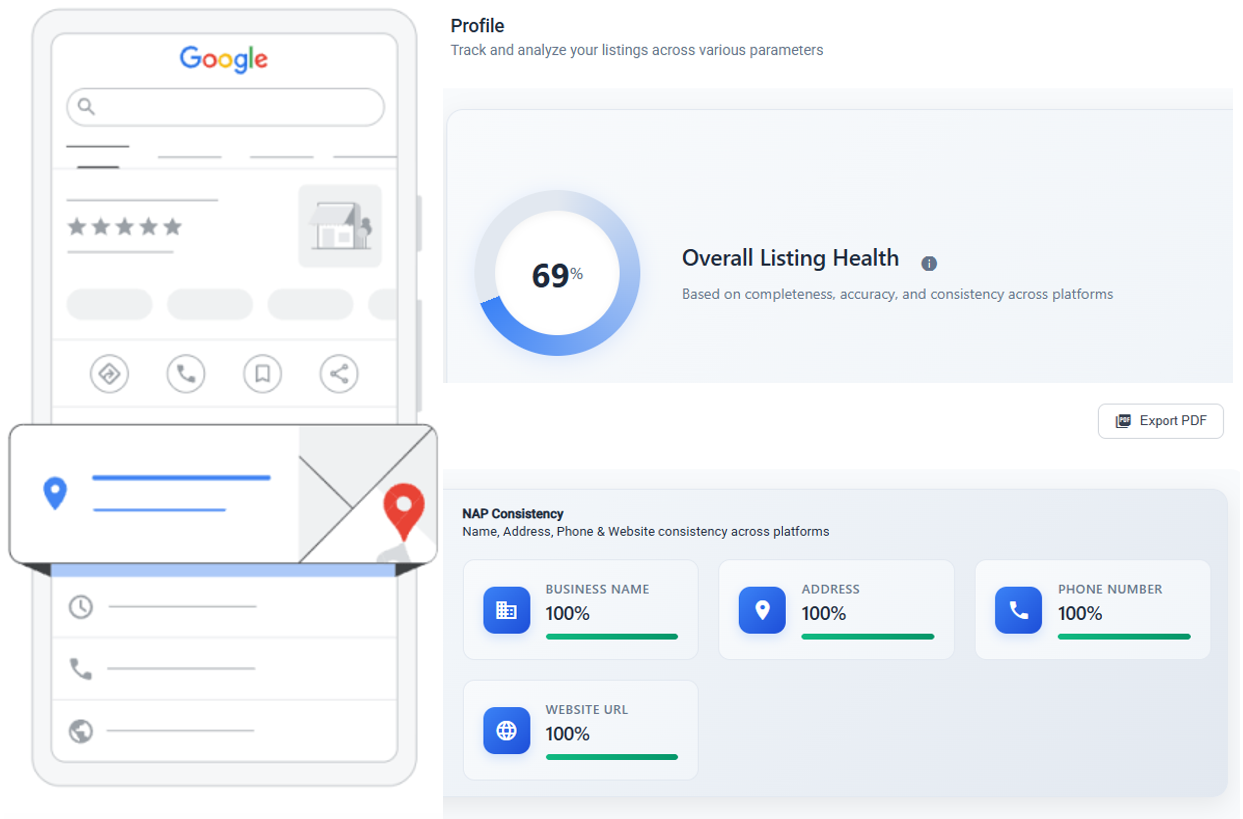
- Ensuring accurate NAP (Name, Address, Phone)
- Harmonizing business categories and attributes
- Updating holiday and operating hours
- Adding consistent brand photos and up-to-date menus
- Applying UTM tracking to monitor campaign performance
Why This Matters
Search engines reward consistency. When every listing is verified and standardized, your brand's relevance increases across local search results.
2️⃣ Real-Time Reputation Management
Rather than letting reviews pile up, the Brand's team used BizLoc8 to:
- Monitor incoming reviews automatically
- Prioritize replies to both negative and influential reviews
- Track sentiment trends over time
- Encourage richer, textual reviews (not just star ratings)
This helped transform customer feedback into both a trust signal and a search ranking signal.
3️⃣ Local Engagement Tracking
We focused on meaningful performance indicators that reflect real customer intent:
- Search impressions on maps and organic results
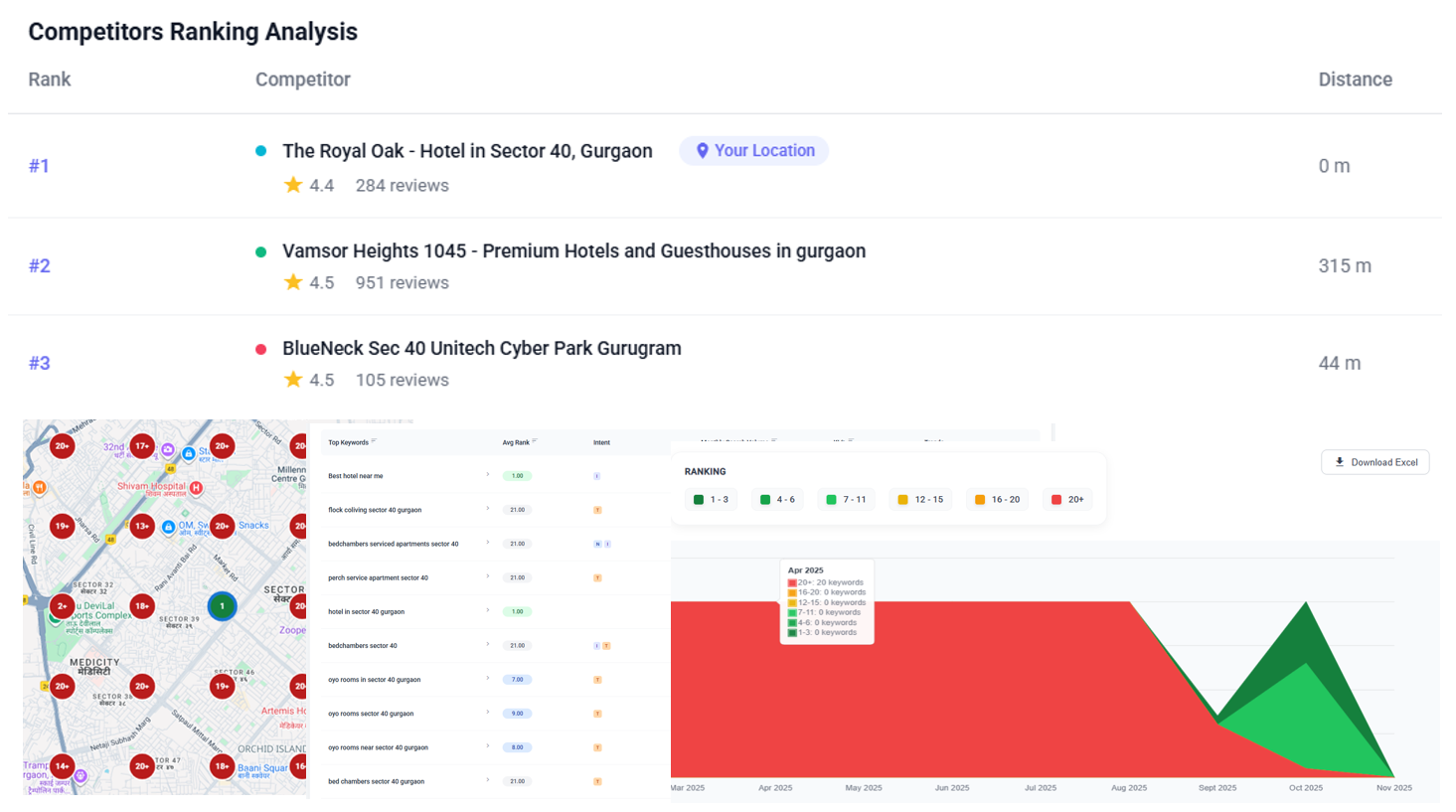
- Ranking positions for target local keywords
- Direction requests (a strong proxy for foot traffic)
- Engagement signals for localized search queries
🚀 Measurable Results in Just 90 Days
Here's how this optimized local framework improved performance:
📈 Review Growth & Sentiment
10,175+ New Reviews Captured
A significant increase in review volume across all locations, providing fresh social proof for potential customers.
76.78% Textual Reviews
Most reviews contained detailed comments, not just star ratings — providing richer context for search engines.
95.28% Positive Sentiment
An overwhelmingly positive sentiment score, with only 4.72% negative reviews across all locations.
203 Reviews Prioritized
Unresponded reviews were flagged and prioritized for response, ensuring no customer feedback went unacknowledged.
This shift not only improved reputation visibility but also enhanced search relevance.
📍 Local SEO & Rankings
After standardizing listings and managing review engagement:
45% Top 3 Rankings
45% of all outlets ranked in the Top 3 for priority local search terms such as "best pizza near me", "family restaurant [city]", and "top local pizza".
These keyword improvements translated into better SERP visibility across key regions.
📊 Search Impressions & Footfall Indicators
+27% Search & Maps Impressions
More potential customers discovering the brand through Google Search and Maps.
+22% Direction Requests
A powerful signal indicating real user intent to visit in person, not just casual browsing.
Why Direction Requests Matter
Direction requests are a powerful signal — they indicate real user intent to visit in person, not just casual browsing. This metric directly correlates with foot traffic and in-store conversions.
🔑 Key Takeaways & Best Practices
Here's what made the difference:
✅ Consistency Builds Local Authority
Verified and standardized listings reduce confusion and enhance relevance in local search. When Google trusts your business data, it rewards you with better visibility.
💬 Textual Reviews Improve Rankings
Encouraging customers to leave comments (not just stars) helps search engines better understand sentiment and context. Rich review content acts as fresh, user-generated content for your listings.
🧭 Prioritize Engagement
Responding to reviews — especially negative ones — boosts customer trust and sentiment over time. It shows potential customers that you value feedback and are committed to service excellence.
📍 Track Footfall Signals
Direction requests and map impressions are strong indicators of offline engagement and should be part of your KPI set. These metrics help you understand the real-world impact of your local SEO efforts.
🔧 Why BizLoc8 Made a Difference
Managing local presence at scale is hard — but it doesn't have to be chaotic.
With BizLoc8, brands gain:
Automated Listings Standardization
Workflows that keep all your locations consistent and up-to-date without manual intervention.
Real-Time Review Monitoring
Smart prioritization that ensures you never miss important customer feedback.
Local Keyword Visibility Tracking
Monitor your rankings for key local search terms across all locations.
Unified Performance Dashboards
One view for reputation and search performance across your entire brand.
This allows brands to focus on strategy, not manual tasks.
📣 Final Thoughts
Multi-outlet brands need a local search strategy that is both scalable and intelligent. This case demonstrates that:
- ✔ Standardization increases search relevance — consistent data builds trust with search engines
- ✔ Reputation management drives engagement — active review management signals quality to customers
- ✔ Local signals correlate with real-world behavior — direction requests translate to foot traffic
When these elements come together — supported by the right platform — local SEO becomes a competitive advantage.
📥 Get Started With BizLoc8
Want to apply this framework to your brand? Explore BizLoc8's platform for listings, reviews, and search performance. See how automated local optimization can transform your local presence.
Related Articles